Yin and Yang (陰陽) is a fundamental concept in Chinese philosophy and cosmology that describes the interconnected and interdependent nature of opposite forces. It originates from Daoism (Taoism) and represents how seemingly contradictory forces are actually complementary and necessary for balance in the universe.
Key Meanings of Yin and Yang:
- Duality & Balance – Everything in the universe has two opposite but complementary aspects that depend on each other (e.g., light and dark, male and female, hot and cold).
- Interconnectedness – Yin and Yang are not static but constantly transforming into one another (e.g., night turns into day, life turns into death).
- Harmony in Opposites – Neither Yin nor Yang is superior; balance between them leads to harmony.
Characteristics of Yin and Yang:
| Yin (陰) | Yang (陽) |
|---|---|
| Feminine | Masculine |
| Dark | Light |
| Passive | Active |
| Moon | Sun |
| Cold | Heat |
| Soft | Hard |
| Rest | Movement |
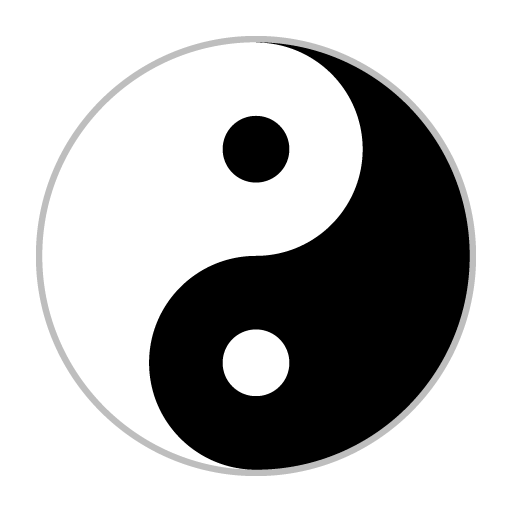
The classic Taijitu (☯️ symbol) visually represents Yin and Yang, showing how each contains a small seed of the other, indicating constant transformation.
Examples of Yin and Yang in Life:
- Day and Night – The world moves between light (Yang) and darkness (Yin).
- Health and Illness – A balance of rest (Yin) and activity (Yang) is necessary for well-being.
- Emotions – Happiness (Yang) and sadness (Yin) coexist, making experiences meaningful.
The goal is not to eliminate one or the other but to maintain a dynamic balance between the two for harmony in life.